Chronicle
*
Chronicle *
The complete blog runs in Substack.com. I post with no fix schedule, only when I feel I have a worthy idea to share.
I write about artworks, contemporary and cultural affairs, spirit of the place, and storytelling . If you enjoy my work, please consider subscribing .
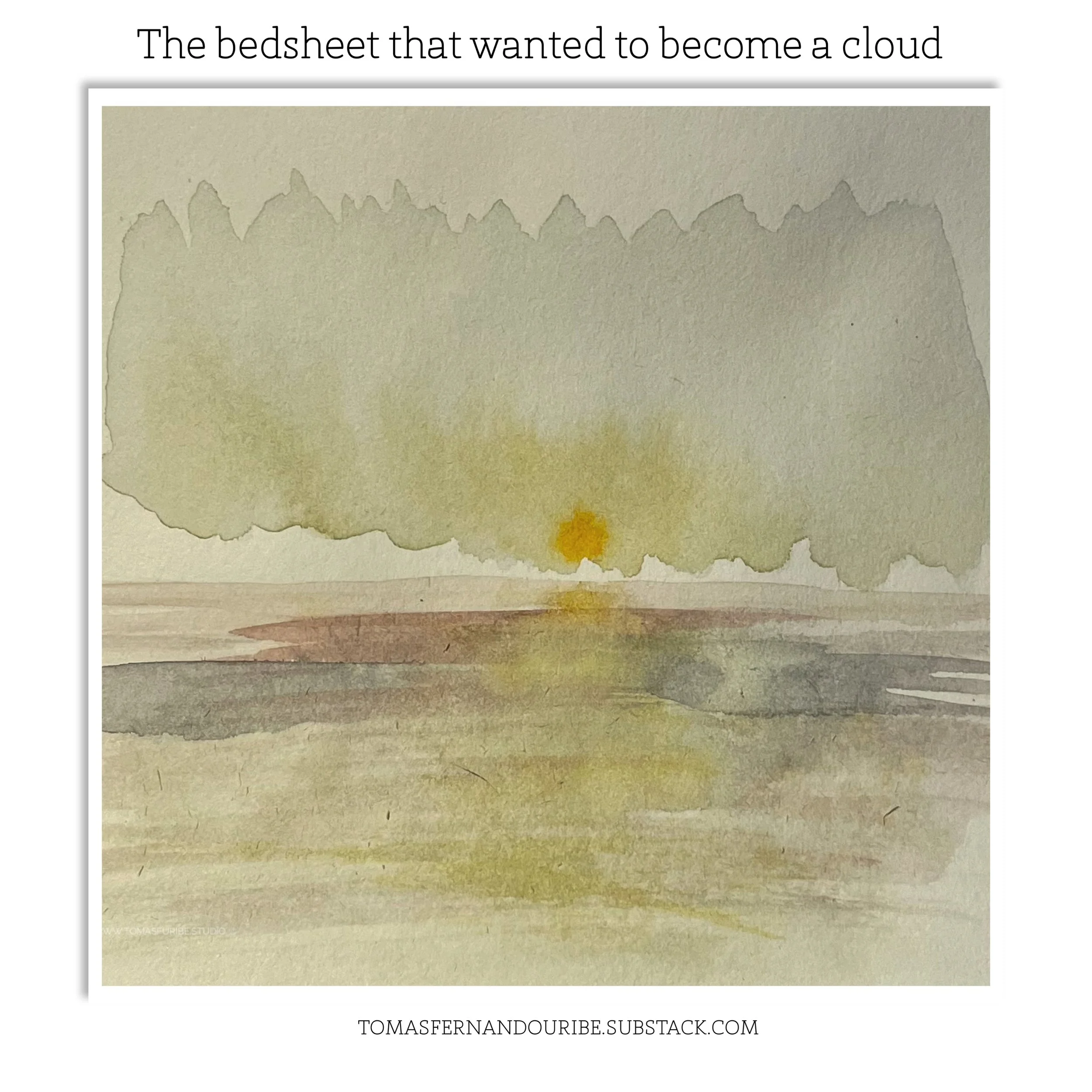
Once upon a time there was a bedsheet
that wanted to be a cloud.
One morning, while its owner had hung it on the lines after washing it so that it could dry, a very strong wind blew, and the sheet seized the moment to rise above and into the sky. A few clouds looked at it with surprise and noticed that the sheet had mild yellow stripes printed on it.
The sheet noted that clouds stare and glance at the fabric,so it decided to hide among a foggy forests, hidding its lines as if they were rays of light crossing through branches until being absorb by fallen leaves. The wind, somewhat vain, wanted to play a trick on the sheets discaise. It blew through the forest and drove the cloud over a field of wheat. It had no choice but to spread itself out and wait, floating gently above the furrows of wheat. At the following dawn, the sun rose once more and evaporated the sheet, which was spread out and close to becoming a mantle of water. It seized the moment and rose to the firmament, leaving behind its stripes upon the furrows of the wheat field.
It became a cumulonimbus, or great cloud with rounded forms, and wanders happily above the earth until it wome up trapped folded, ready once again to harness the owner’s dream.
..and so this tale is told.
When You Grow Up
July 20,2026
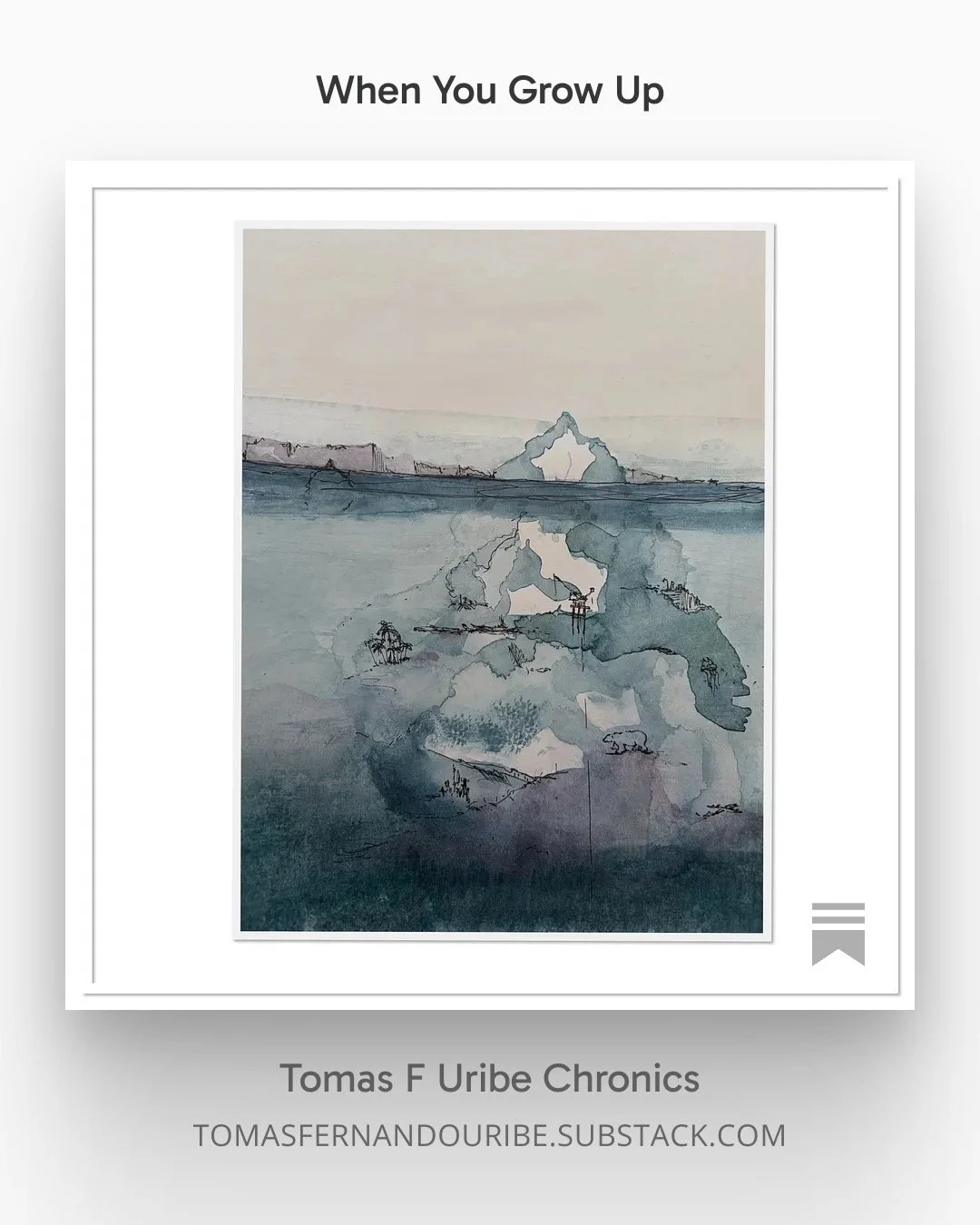
MY father used to tell me that, when I grew older, there would be so much oil, water, and so many animals that we would never run out of food or resources. He had been taught that the seas were infinite had endless minerals, animals from which riches could be extracted. If someone invented a method to separate the solids from seawater, they could become a millionaire. The wealth of a cubic kilometer of salt water seemed incalculable.
When I was eight, he spoke to me about plastic with shining eyes. He told how some technicians, in a laboratory, had created something so beautiful and useful. He said that soon glass bottles would be replaced by plastic ones and that synthetic clothing would be invented. “No more wool!” he exclaimed. “And who knows how many more things they will make. The new generations are going to enjoy advancement and progress.”
Another time he assured me that, with all the fish in the sea, there would be food forever. Never again would there be hunger. Abundance was guaranteed; all that remained was to resolve the wars, but thanks to the given surplus it would one day disappear. One day all parties would come to an agreement. He would close his speech by saying that the fish and the other species would continue reproducing until the end of time, with war or without it. I believed everything he told me because he was my father. It was 1962 and one day man would reach the Moon.
It is July 2026. How do I tell my grandchildren that things did not turn out as the parents of the first half of the twentieth century imagined?
With what face will I tell them that several generations were mistaken in believing that everything could be wasted and that nothing would ever run out? Many still do not understand that the oil party leaves smoke as the bill and micro plastic particles. My generation, that of the sixties and seventies, lived preoccupied with escaping the atomic holocaust while enjoying the beat of the times while criticizing everything that did nor resemble our ways or vibes. How can I confess to my grandchildren that we still have not learned to be part of nature? We remain haughty, indifferent, or deaf. We have learned nothing, despite the signs and the smells that come from the synthetic mountains of consumed rubbish and submerged plastic bags. Nor have we taught the new generations how to defend ourselves from such believes. Perhaps we ourselves do not even know how, because we remain clinging to the stories of the older. We still do not even comprehend how the motto “make love and not war” ended up turned into a slogan and later on into a sticker on the car’s bumper. It just happened thanks to the changes or the mode.
We live in a time when what is urgent is to stabilize the planet’s inestable climate, build peace among human beings, and imagine a possible future in harmony with all beings . We need to figure out how to be resilient without eroding the earth’s crust and air.
Sometimes I think we do not want to let go of the stories we were told and prefer to believe that none of this is true. I close my eyes and cling to the future that I felt as promosed; then I open them and see a present made of shortages, smoke, and silence, so unlike the world of my childhood that it feels like a betrayal. And if the promises of our childhood were only a dream made out of wishes. What future and story can we tell to our grandchildren or to those who will one day ask us what we did with the world we were given?
Why did we not live up to our dreams? When did we stop thinking and began spending above means we are just thriving in the crest of the wave, merrily heading into the enormity of the vast ocean.
Walking up the hill during winter can become a promise, a challenge, a conquest. Stoping to catch a breath, release the hand comfortably snug inside the globe to reach the sketchbook can become a battle of patience. At last the eye has captures a scene where dancing spirits shape as rocks stare at everyone who dares to be blinded by the snows glare. The battle between paper and pen is over. The bushes clear and Kondiaronk Explanade appears in lts might.
At the edge of Mount Royale belvedere lies a secret view,hidden at plain site, sometimes covered by the fog of Montreal's skyline.
At the studio the spirits of the Great Peace of Montreal 1701 emerge from the sketch to impregnate cotton and pigments.